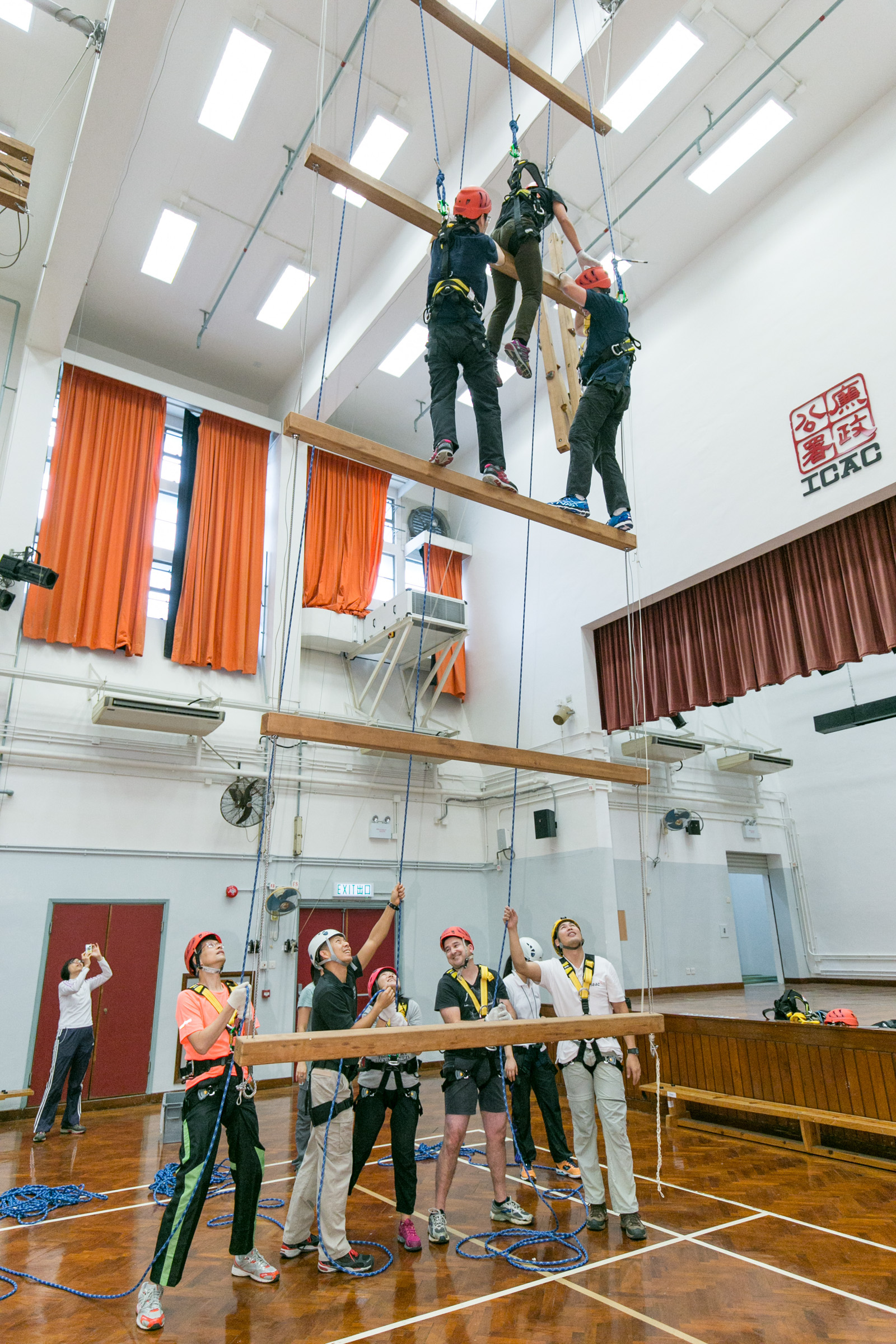
ICAC Command Course enhances officers’ leadership skills to confront challenges
2015-11-27
Thirty anti-graft and law enforcement officers from 21 local, Mainland and overseas agencies have completed a month-long ICAC Command Course to help enhance their leadership and management skills to confront challenges.
Addressing the closing ceremony of the 35th ICAC Chief Investigators’ Command Course today (Friday), ICAC Commissioner Mr Simon Peh Yun-lu told the participants that as seasoned officers, they were aware of the challenges they faced daily in their mission to combat crimes and make safer the communities they lived in.
“To ensure that we succeed in that task, we need to embrace changes, constantly ensure that we adopt the best practices and give the people we serve the best that we can provide,” Mr Peh said.
“Courses such as this are therefore designed to broaden your horizons, challenge your assumptions and help you on the road to become effective leaders and managers.”
This year’s course featured visiting and local prominent speakers from legal, public service and business fields, and case studies of major investigations conducted by senior ICAC officers.
Speakers included Mr Jasper Tsang Yok-sing, President of the Legislative Council; Mr Lam Woon-kwong, Convenor of the Non-Official Members of the Executive Council; Mr Chow Chung-kong, Chairman of the Advisory Committee on Corruption and the Hong Kong Exchanges and Clearing Limited; Mr Benjamin Tang Kwok-bun, former Director of Audit; and Dr Anthony Francis Neoh, former Chief Adviser of the China Securities Regulatory Commission.
The four-week course featured a three-day law enforcement leadership training by Mr Neville Taylor, Superintendent of the Australian Institute of Police Management, and a five-day comparative studies visit to Fujian Province.
This year’s course attracted 30 participants from Asia, Australia and North America, including nine ICAC officers.
Overseas agencies included the Australian Federal Police, the Department of Immigration and Border Protection of Australia, the Anti-Corruption Commission of Bhutan, the Royal Canadian Mounted Police, the Corruption Eradication Commission of the Republic of Indonesia, the Anti-Corruption Commission of Malaysia, the Corrupt Practices Investigation Bureau of Singapore, the Singapore Police Force, the New York City Department of Investigation and the Federal Bureau of Investigation of the United States.
Local agencies included the Correctional Services Department, the Customs and Excise Department, the Fire Services Department, the Hong Kong Police Force, the Immigration Department and the Securities and Futures Commission.
There were also participants from the Beijing Municipal People’s Procuratorate, the People’s Procuratorate of Guangdong Province, the People’s Procuratorate of Fujian Province, and the Macao Commission Against Corruption.
Since the 1970s, a total of over 730 participants had benefited from the ICAC’s command course.
Addressing the closing ceremony of the 35th ICAC Chief Investigators’ Command Course today (Friday), ICAC Commissioner Mr Simon Peh Yun-lu told the participants that as seasoned officers, they were aware of the challenges they faced daily in their mission to combat crimes and make safer the communities they lived in.
“To ensure that we succeed in that task, we need to embrace changes, constantly ensure that we adopt the best practices and give the people we serve the best that we can provide,” Mr Peh said.
“Courses such as this are therefore designed to broaden your horizons, challenge your assumptions and help you on the road to become effective leaders and managers.”
This year’s course featured visiting and local prominent speakers from legal, public service and business fields, and case studies of major investigations conducted by senior ICAC officers.
Speakers included Mr Jasper Tsang Yok-sing, President of the Legislative Council; Mr Lam Woon-kwong, Convenor of the Non-Official Members of the Executive Council; Mr Chow Chung-kong, Chairman of the Advisory Committee on Corruption and the Hong Kong Exchanges and Clearing Limited; Mr Benjamin Tang Kwok-bun, former Director of Audit; and Dr Anthony Francis Neoh, former Chief Adviser of the China Securities Regulatory Commission.
The four-week course featured a three-day law enforcement leadership training by Mr Neville Taylor, Superintendent of the Australian Institute of Police Management, and a five-day comparative studies visit to Fujian Province.
This year’s course attracted 30 participants from Asia, Australia and North America, including nine ICAC officers.
Overseas agencies included the Australian Federal Police, the Department of Immigration and Border Protection of Australia, the Anti-Corruption Commission of Bhutan, the Royal Canadian Mounted Police, the Corruption Eradication Commission of the Republic of Indonesia, the Anti-Corruption Commission of Malaysia, the Corrupt Practices Investigation Bureau of Singapore, the Singapore Police Force, the New York City Department of Investigation and the Federal Bureau of Investigation of the United States.
Local agencies included the Correctional Services Department, the Customs and Excise Department, the Fire Services Department, the Hong Kong Police Force, the Immigration Department and the Securities and Futures Commission.
There were also participants from the Beijing Municipal People’s Procuratorate, the People’s Procuratorate of Guangdong Province, the People’s Procuratorate of Fujian Province, and the Macao Commission Against Corruption.
Since the 1970s, a total of over 730 participants had benefited from the ICAC’s command course.