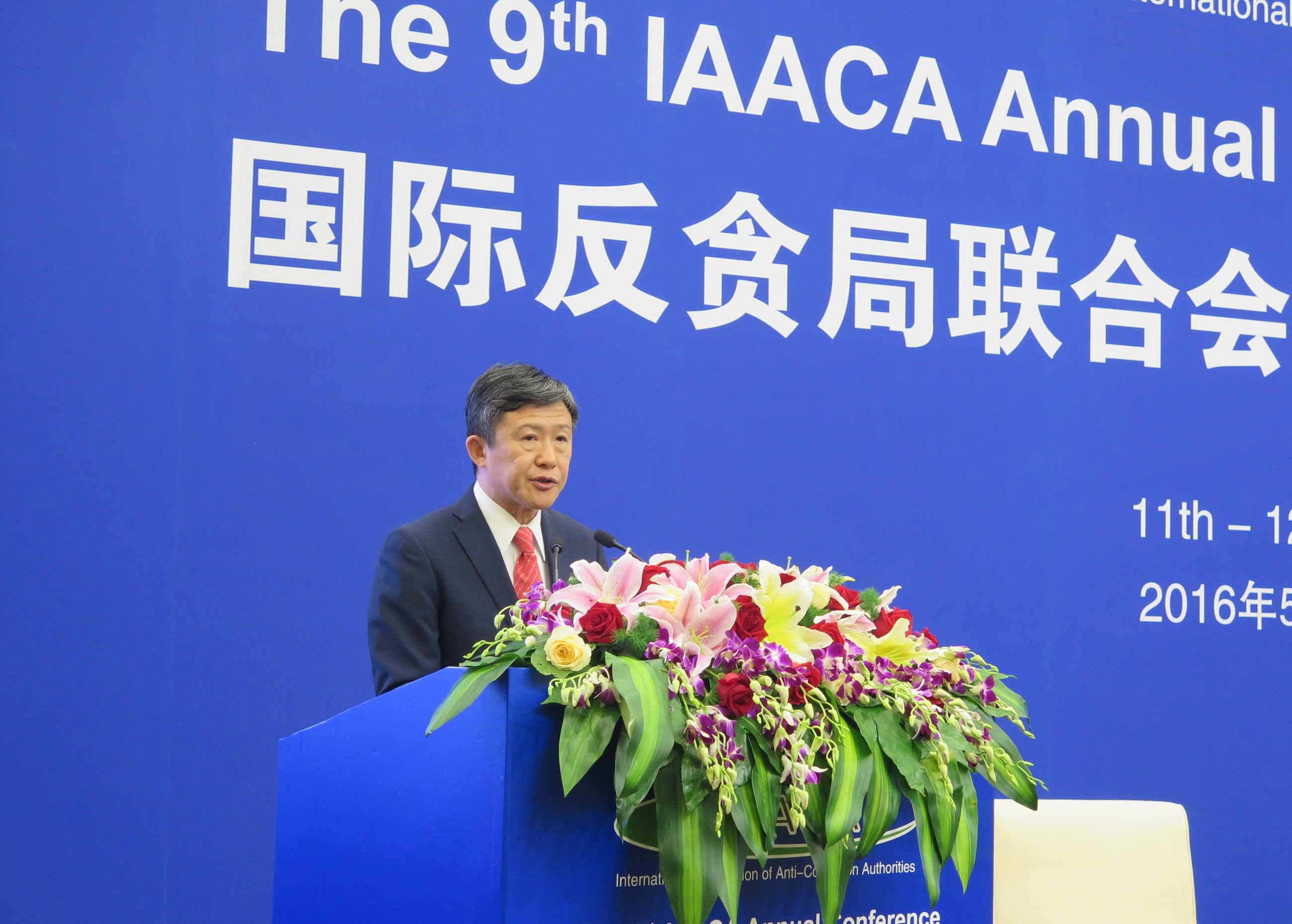
Authorities must unite efforts to fight graft, says ICAC chief
2016-5-11
Anti-corruption authorities (ACAs) have to remain steadfast, unite efforts and reinforce mutual capacity to fight graft, ICAC Commissioner Mr Simon Peh Yun-lu has told an international conference.
Addressing a plenary session at the Ninth Annual Conference and General Meeting of the International Association of Anti-Corruption Authorities (IAACA) held in Tianjin today (Wednesday), Mr Peh said warning beacons had been lighted that corruption was undermining political systems and destabilising societies.
“Graft cases are engulfing national leaders, senior executives of multi-national enterprises and officials of international organisations. The latest revelations are the use of offshore companies to shroud beneficial ownership, evade taxes and launder corrupt proceeds and assets,” Mr Peh said.
At a plenary session of the conference themed “The Future of ACAs: Lessons Learned and Charting the Way Forward”, Mr Peh shared Hong Kong’s anti-corruption experience with about 300 delegates from around 80 countries, territories and international organisations.
Mr Peh said the independent status of the ICAC, the strong and continuous political will of the government, the sound rule of law, the prevalent public support and participation, along with a holistic approach combining enforcement, prevention and education, as well as a stringent mechanism of checks and balances had all contributed to Hong Kong’s successful graft fighting work.
After more than 42 years, Mr Peh said, the ICAC, together with the community, had turned Hong Kong from a corruption-plagued city to a metropolis with a deep-rooted culture of probity.
The Commissioner noted that for ACAs to chart the way forward in the battle against corruption, they needed to be agile in adapting to changes posed by the advent of globalisation and the advancement of information technology and take innovative approaches.
“More extensive and intensive collaboration among jurisdictions should be initiated to close loopholes being exploited by the corrupt, bring culprits to justice no matter where they are, and strip them of ill-gotten gains,” he said.
Under the United Nations Convention Against Corruption (UNCAC) and bilateral agreements of mutual legal assistance in criminal matters, the ICAC received 31 requests from 19 countries and made 14 requests to nine countries in the past three years.
Mr Peh called on ACAs to take real action by practising what they advocated.
“We need to put obligations and commitments into genuine endeavours, turn conceptual ideas into actionable programmes and convert local contextual successes into universal best practices,” the Commissioner concluded.
The IAACA is a non-governmental international organisation set up to promote international cooperation in the fight against corruption and foster the implementation of the UNCAC. It comprises over 300 organisational members from anti-graft agencies and related organisations worldwide, including the ICAC.
Accompanying Mr Peh to attend the IAACA conference was Mr Lawrence Chung Wan-hon, Acting Principal Liaison Officer of the International and Mainland Liaison Office. They will return to Hong Kong later today.
Addressing a plenary session at the Ninth Annual Conference and General Meeting of the International Association of Anti-Corruption Authorities (IAACA) held in Tianjin today (Wednesday), Mr Peh said warning beacons had been lighted that corruption was undermining political systems and destabilising societies.
“Graft cases are engulfing national leaders, senior executives of multi-national enterprises and officials of international organisations. The latest revelations are the use of offshore companies to shroud beneficial ownership, evade taxes and launder corrupt proceeds and assets,” Mr Peh said.
At a plenary session of the conference themed “The Future of ACAs: Lessons Learned and Charting the Way Forward”, Mr Peh shared Hong Kong’s anti-corruption experience with about 300 delegates from around 80 countries, territories and international organisations.
Mr Peh said the independent status of the ICAC, the strong and continuous political will of the government, the sound rule of law, the prevalent public support and participation, along with a holistic approach combining enforcement, prevention and education, as well as a stringent mechanism of checks and balances had all contributed to Hong Kong’s successful graft fighting work.
After more than 42 years, Mr Peh said, the ICAC, together with the community, had turned Hong Kong from a corruption-plagued city to a metropolis with a deep-rooted culture of probity.
The Commissioner noted that for ACAs to chart the way forward in the battle against corruption, they needed to be agile in adapting to changes posed by the advent of globalisation and the advancement of information technology and take innovative approaches.
“More extensive and intensive collaboration among jurisdictions should be initiated to close loopholes being exploited by the corrupt, bring culprits to justice no matter where they are, and strip them of ill-gotten gains,” he said.
Under the United Nations Convention Against Corruption (UNCAC) and bilateral agreements of mutual legal assistance in criminal matters, the ICAC received 31 requests from 19 countries and made 14 requests to nine countries in the past three years.
Mr Peh called on ACAs to take real action by practising what they advocated.
“We need to put obligations and commitments into genuine endeavours, turn conceptual ideas into actionable programmes and convert local contextual successes into universal best practices,” the Commissioner concluded.
The IAACA is a non-governmental international organisation set up to promote international cooperation in the fight against corruption and foster the implementation of the UNCAC. It comprises over 300 organisational members from anti-graft agencies and related organisations worldwide, including the ICAC.
Accompanying Mr Peh to attend the IAACA conference was Mr Lawrence Chung Wan-hon, Acting Principal Liaison Officer of the International and Mainland Liaison Office. They will return to Hong Kong later today.