On Christmas day 1953, a fire broke out at the Shek Kip Mei Squatter Area and left more than 50,000 people homeless. The blaze obliged the government to draw up a policy on public housing and a large number of low-cost housing estates were built to resettle the displaced squatters.
However, well-intentioned as it was, no-one realised this massive housing project would sow the seeds of a scandal in subsequent years.
On January 9, 1982, the ICAC received information that there were structural defects at some blocks of the Kwai Fong Estate blocks, an 11-block project built in 1971. The most serious problem was found at Block 6 where Housing Department inquiry revealed that the concrete was under strength. This was caused, it said, by insufficient cement being mixed into the concrete.
Subsequently, the Housing Department carried out in 1983 and 1984 a thorough structural inspection of all public housing blocks of five-years-old or more with special attention on concrete quality and strength.
(Caption : Legislators inspected an affected unit in late 1985 to see for themselves the gravity of the problem.)
In November 1985, the Housing Department announced that the strength of the concrete in Blocks 8, 9, 10 and 11 of Kwai Fong Estate and at 22 other public housing blocks - all built between 1964 and 1973 - were below standard. Those blocks would have to be demolished as they posed a danger to residents. The announcement triggered heavy criticism from the public and a number of legislators.
Residents associations and pressure groups petitioned Legislative Council members to voice their grievances and some suggested that corruption might be involved. The Legco responded by setting up various working groups to probe into the structural safety of the 26 blocks and the legal aspects of the issue.
Some Legco members urged the authorities to conduct an in-depth investigation into the “scandal” to find out whether corruption was indeed involved and to take legal or disciplinary action against culpable officials and construction contractors.
The 26 problem blocks to be pulled down were all of Type I and Type II resettlement housing estates which were built to “meet emergency needs”. Facilities provided in these estates, all were six-to-seven storeys, were basic and simple. Of these 26 blocks, nine were in the New Territories, 15 in Kowloon and two on the Hong Kong Island.
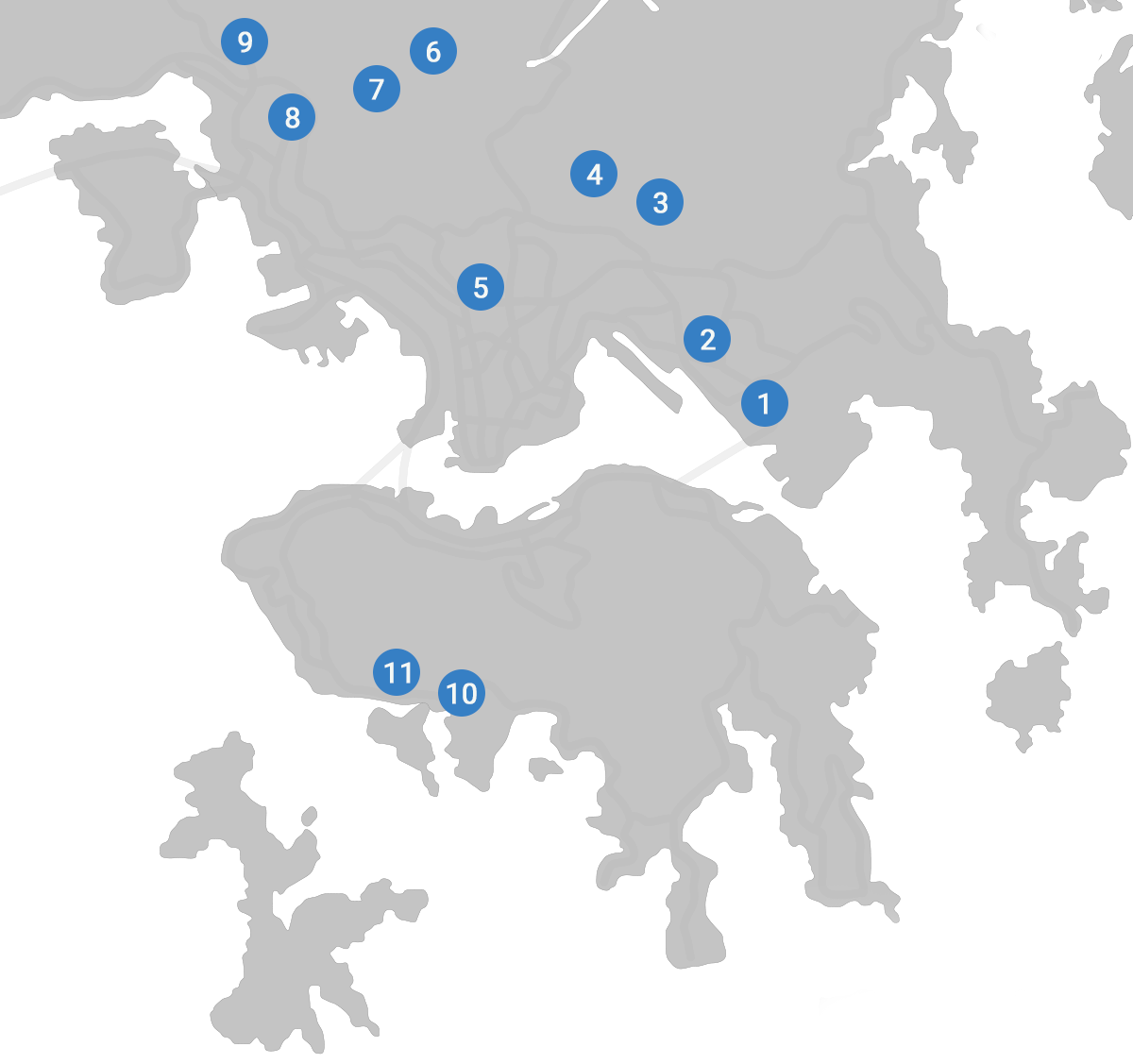
Blocks 12, 13 and 17
Block 26
Blocks 61 - 65
Block 40
Blocks 14 - 16
Blocks 4 and 6
Blocks 3 - 5
Block 8 - 11
Blocks 18 and 20
Block 9
Block 2
The Housing Department’s announcement to demolish the 26 problem blocks triggered strong protests from affected residents and aroused concerns of members of the then Legco. In a Legco meeting held on December 18, 1985, some Legco members urged for a thorough investigation into the ‘26 Blocks Scandal’ to ascertain whether corruption was at play. The Legco members also demanded legal or disciplinary actions against responsible government officials and contractors found to be responsible.